In this article
- 1.Discovery dives: your first time underwater
- 2.Certified diving: the best dive sites in Benidorm
- 3.Snorkelling in Benidorm: the no-tank alternative
- 4.Diving rules in the Serra Gelada Natural Park
- 5.Best time of year to dive in Benidorm
- 6.What you need to go diving
- 7.Diving companies in Benidorm and nearby
Benidorm isn't just beaches and skyscrapers: underneath the water it hides one of the best marine reserves on the Costa Blanca, between Benidorm Island and the Serra Gelada Natural Park. In this guide we cover discovery
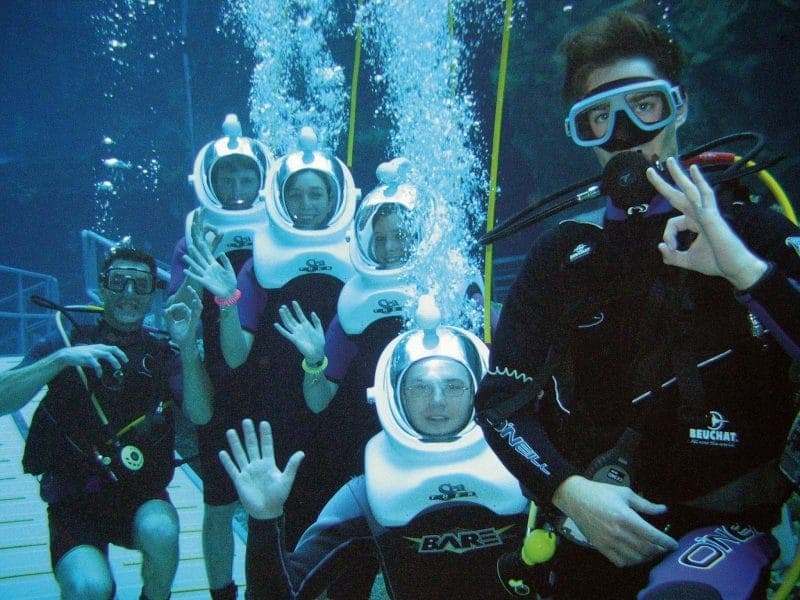
Benidorm isn't just beaches and skyscrapers: underneath the water it hides one of the best marine reserves on the Costa Blanca, between Benidorm Island and the Serra Gelada Natural Park. Warm water, good visibility most of the year, and seabeds full of moray eels, octopus, eagle rays and fish shoals make Benidorm a real diving destination, not just a sun-and-sand one. In this guide we cover how to try it without any certification (a discovery dive), where to dive if you're already certified, when to go, the rules you need to respect, and which local companies offer it, with their contact details.
Discovery dives: your first time underwater
You don't need a certification or previous experience to try diving. A discovery dive is a short, guided dive, always with an instructor dedicated only to you, designed so you can feel what it's like to breathe underwater for the first time. It can be done straight from the beach or by boat to Benidorm Island, where the dive is more spectacular. It's suitable for beginners of any age, as long as it's an accredited centre that adapts the activity to your level.
As a price reference (approximate, always confirm with the centre before booking): a discovery dive from the beach is usually around 95€, and a discovery dive by boat to Benidorm Island around 115€, with equipment and usually a photo package included.
Certified diving: the best dive sites in Benidorm
If you already hold a diving certification, Benidorm Island and its surroundings offer several dive sites that are quite different from one another, almost all just a few minutes by boat from the harbour. These are the best known among local diving centres:
La Llosa
Considered the star dive of the Costa Blanca, only 5 minutes by boat from Benidorm Island. It's a submerged reef with its top at -6 metres, where a shoal of two-banded sea bream often appears. One side descends to a flat area at -18 metres with moray eels among the rocks; on the opposite side, a steep drop-off plunges to -25 metres, the most spectacular part, with damselfish, dentex, lobsters, barracudas and even the occasional grouper.
Los Arcos
On the north side of the island. A gradual dive that starts at 6 metres, stays around 10 metres until you reach a very photogenic underwater arch, then drops to about 18 metres before heading back to the boat, an area where colonies of eagle rays usually appear. Suitable for all levels, with octopus, conger eels, moray eels and dentex.
Punta Garbí
Next to the island's slope, with sandy seabeds. It's an easy dive, recommended for those starting out in certified diving, where you might find weever fish in winter or lizardfish in summer, moray eels and conger eels among the rocks, and eagle rays half-buried in the sand. At sunset it's also a good spot for night dives.
Embarcadero and Caribeña
Embarcadero is one of the easiest dives in the area; it's recommended mainly in winter, since in summer there's more boat traffic. Caribeña, between Punta Garbí and Los Arcos, already calls for a bit more experience due to the movement in the area, with depths between 10 and 18 metres and regular sightings of octopus, conger eels, moray eels and eagle rays.
Cuevas de El Elefante and Sierra Helada
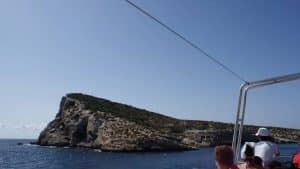
A bit further from the Island but within the same protected area, the Cuevas de El Elefante are a system of underwater caves much sought after by underwater photographers, with lobsters and crabs among the rocks — it's recommended to always do this one with a guide because of how complex the terrain is. The Sierra Helada seabeds, already within the Natural Park, have walls that descend gently, suitable both for discovery dives and intermediate-level dives, with sunfish and cuttlefish.
Snorkelling in Benidorm: the no-tank alternative
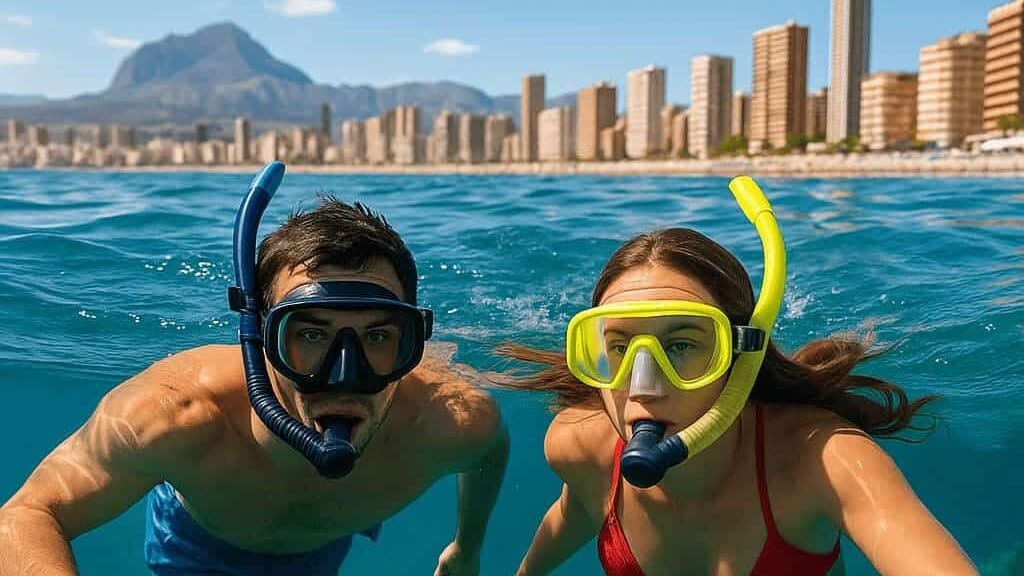
If you don't want to or can't dive with a tank, snorkelling lets you see much of this same marine life from the surface, with no certification and no heavy equipment — just a mask, snorkel and fins. Several diving centres in Benidorm also run boat trips for snorkelling at Benidorm Island itself. If you want the best spots in the area and 12 practical tips to do it properly, we have a full guide to snorkelling in Benidorm.
Diving rules in the Serra Gelada Natural Park
Benidorm Island and much of this seabed are part of the Serra Gelada Natural Park, a protected area with restrictions in some zones. That's why it's recommended to always dive with an accredited centre or a local guide who knows the authorised zones, to stick to marked swimming areas, not to touch or remove marine flora or fauna, and not to feed the fish. It's the same rule we follow when snorkelling around the island: enjoy the seabed, but look after it.
Best time of year to dive in Benidorm
May to October is considered the ideal season, with better visibility and warmer water — in summer it usually goes above 24°C. In spring and autumn the water sits around 18-20°C, perfectly comfortable with a 5mm wetsuit. Many diving centres in Benidorm are open all year round for courses and local dives, so if you're coming outside of high season it's still worth asking.
What you need to go diving
For a discovery dive you don't need to bring anything: the centre lends you all the equipment. If you already hold a certification and dive fairly often, the basic kit is a wetsuit (5mm in spring/autumn, thinner in summer), regulator, mask, fins, tank and dive computer — most centres also rent out full equipment if you'd rather not travel with your own.
Diving companies in Benidorm and nearby
Here are the diving centres in the area with their contact details. Prices and schedules can change, so always confirm them directly with each company before booking.
Diving Stones
A diving centre right in Benidorm's harbour, 10 minutes by boat from the Island, with over 15 years of experience in the area. It offers discovery dives (from the beach or by boat to the Island), guided single or double dives, night dives, snorkelling at the Island and international diving certifications (Scuba Diver, Open Water, Advanced, Rescue, Divemaster and specialties).
- Address: Puerto de Benidorm, Paseo de Colón 1, 03501 Benidorm (Alicante)
- Phone / WhatsApp: 618 406 991
- Bookings: online or by WhatsApp, open all year round
Nisos Benidorm
A diving centre in Benidorm offering technical diving courses (GUE certified), snorkelling trips and equipment rental, as well as underwater photography of your dives. Open Tuesday to Sunday.
Buceo Altea
A diving centre based in Altea's harbour, very close to Benidorm, that runs trips specifically to the Benidorm Island and Serra Gelada dive sites described above (La Llosa, Los Arcos, Punta Garbí, Embarcadero, Caribeña). It offers discovery dives and guided dives for certified divers, with small groups and parking at the centre itself.
- Phone: 607 23 93 78
- Email: curso@buceoaltea.com
Whether you've come to try it for the first time with a discovery dive, or you already hold a certification and are after your next dive at La Llosa or Los Arcos: from Camping Armanello you have all of these centres just a few minutes away, and when you're back there's always the pool or the beach for the rest of the day.
Written by
Juan Delgado VillenaExecutive Director of Camping Armanello
Tourism professional with experience in the management and direction of campsites on the Costa Blanca since 2008. Executive Director of Camping Armanello and CEO of Deltia, he combines his knowledge of Benidorm with tourism management and digital transformation.
Comments
Are we convincing you?
Book your stay in Benidorm