In this article
Polop, or Polop de la Marina, is a village in the Marina Baixa with a castle of Islamic origin, a square with 221 water spouts and 17 routes published by the Town Council, for hiking and canyoning. It is close to Benidor
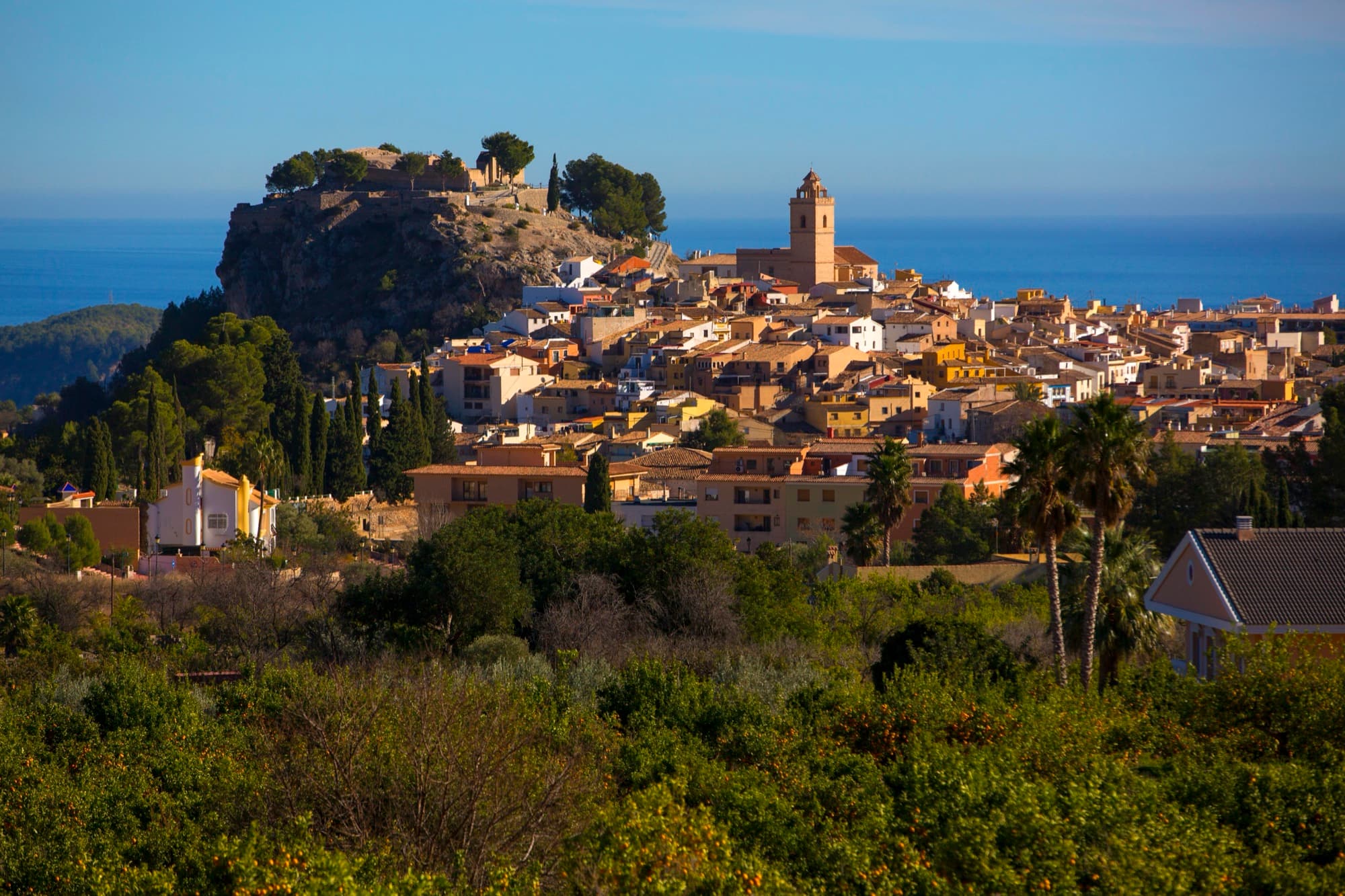
Polop, or Polop de la Marina, is a village in the Marina Baixa with a castle of Islamic origin, a square with 221 water spouts and 17 routes published by the Town Council, for hiking and canyoning. It is close to Benidorm, so it works as a short excursion if you are staying in the area.
What to see in the village centre
Polop castle
The castle is of Islamic origin and was built in the early 12th century. In 1271 James I handed the town over to Beltrán de Belpuig. It stands on a hill overlooking the village, in the area known as Cementerio Viejo (the Old Cemetery), and you reach it by a path that starts in the village itself. Inside there are remains of a cistern and of a square rubble-stone tower.
The town council website does not publish opening hours, prices or guided visits for the castle. If you want to know more before you climb up, the tourist office (turismo@polop.org) is the one that can clear it up.
Plaza de los Chorros
Plaza de los Chorros, the Font dels Xorros in Valencian, is what people remember most about Polop. It has 221 water spouts. Yes, 221.
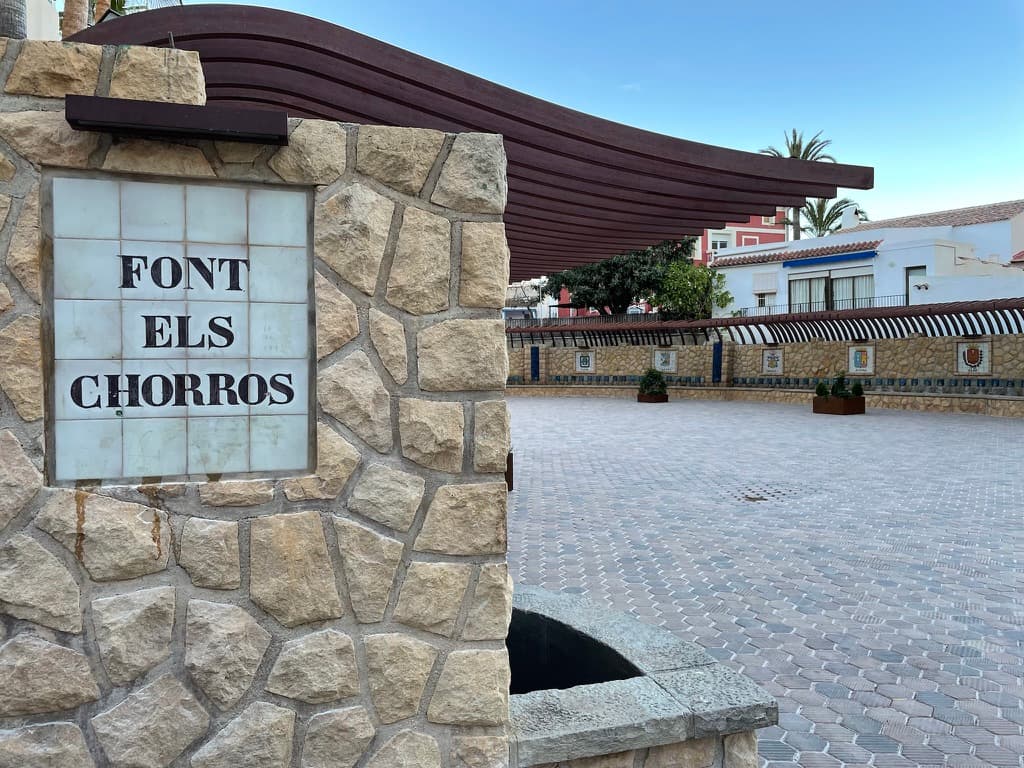
What catches the eye most are the coats of arms. On the wall there are tiles with the coats of arms of towns and cities, each above its own stretch of spouts. In the photos you can make out, among others, those of Alcoy, Alicante, Altea, Benidorm, Elda, Jijona, La Nucía and L’Alfàs del Pi, as well as that of Polop de la Marina. It is typical to have your photo taken next to the coat of arms of your own town, so see whether yours is there.
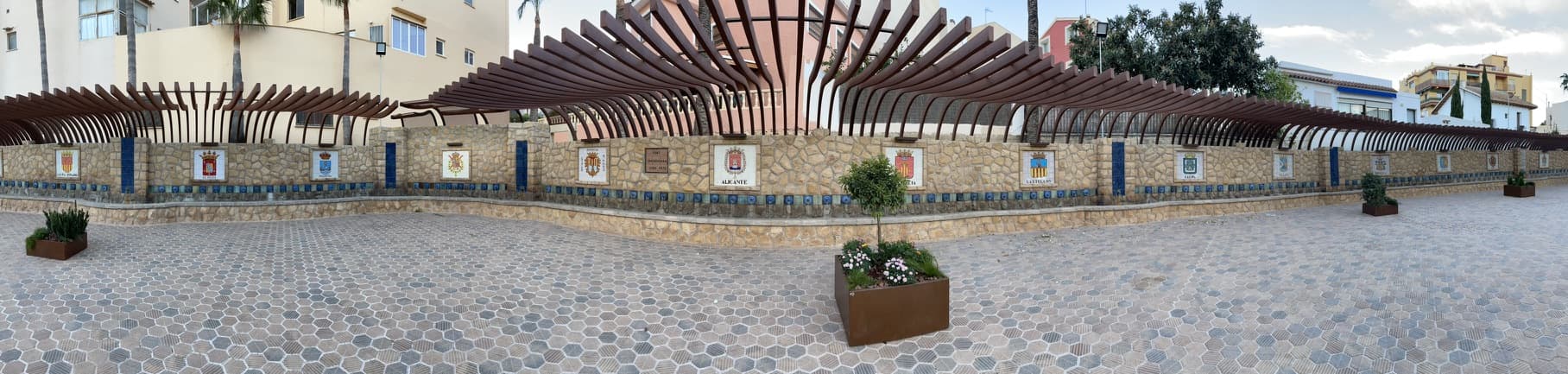
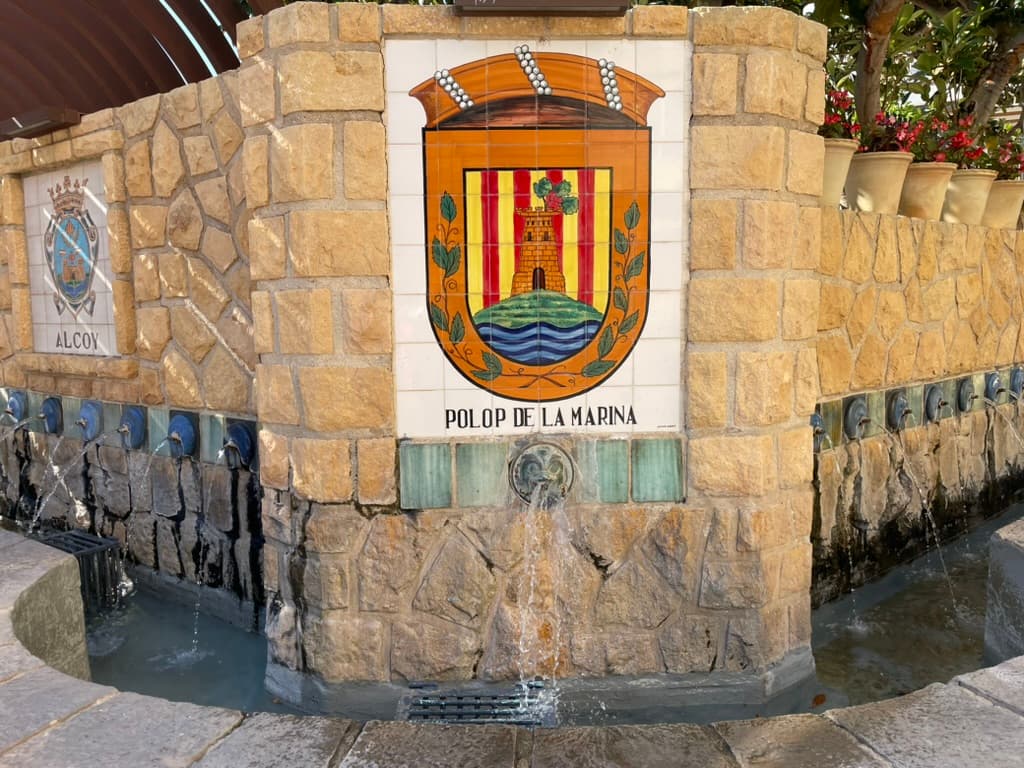
Water is the other half of the story. Many people come with jerrycans to take it home and drink it. A plaque on the fountain says the water comes straight from a spring and that it comes from the Riego Mayor of Polop. If you plan to drink it, check with the Town Council first that it is in service as drinking water.
The Riego Mayor is much older than the square, and it reached as far as Benidorm (we tell you more below). According to the information panel at the fountain, in the 17th century, after the expulsion of the Moriscos, Beatriz Fajardo, owner of the lordship of Polop, decided to build a large irrigation channel that ended up watering more than 1,200 hectares in Polop, L’Alfàs del Pi, La Nucía and Benidorm. The fountain itself dates from 1885, when it had only 11 spouts, and the panel says its waters rise in the springs of Sirer and Terrer, in the Gulapdar ravine. A plaque records that the work was paid for in 1975-1976 with help from the Civil Government and the Provincial Council.
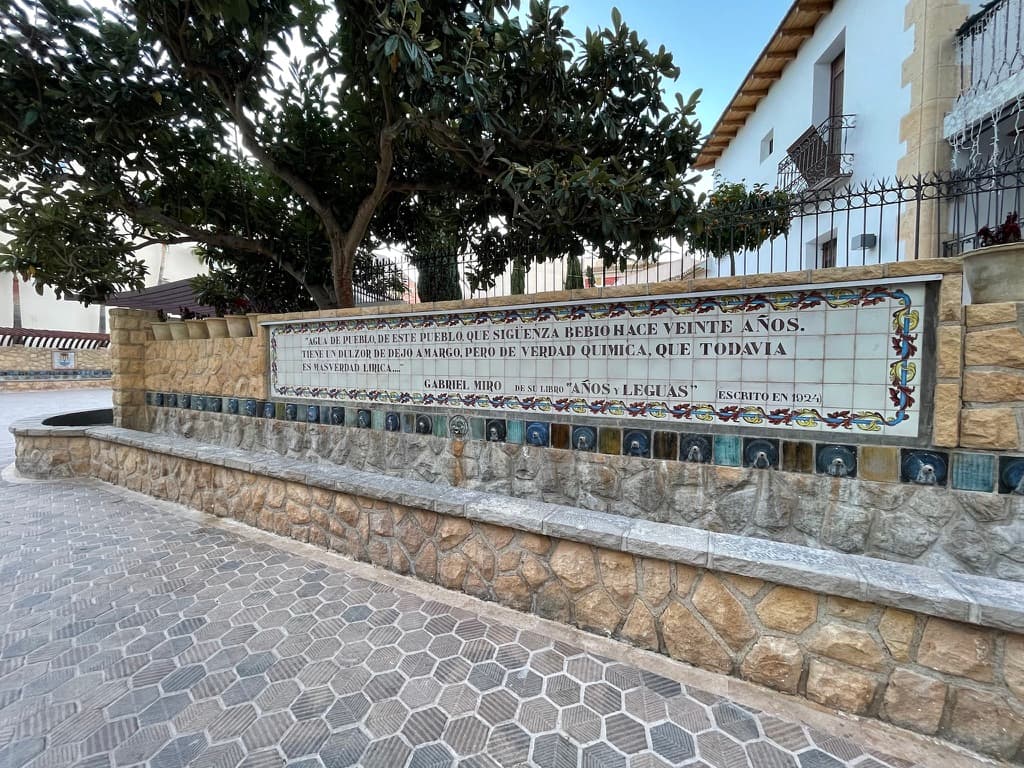
On the wall there is also a tile with a text by Gabriel Miró, from his book Años y leguas, written in 1924: “Village water, of this village, which Sigüenza drank twenty years ago.”
Casa Museu Gabriel Miró
The Casa Museu Gabriel Miró is a villa of architectural value.
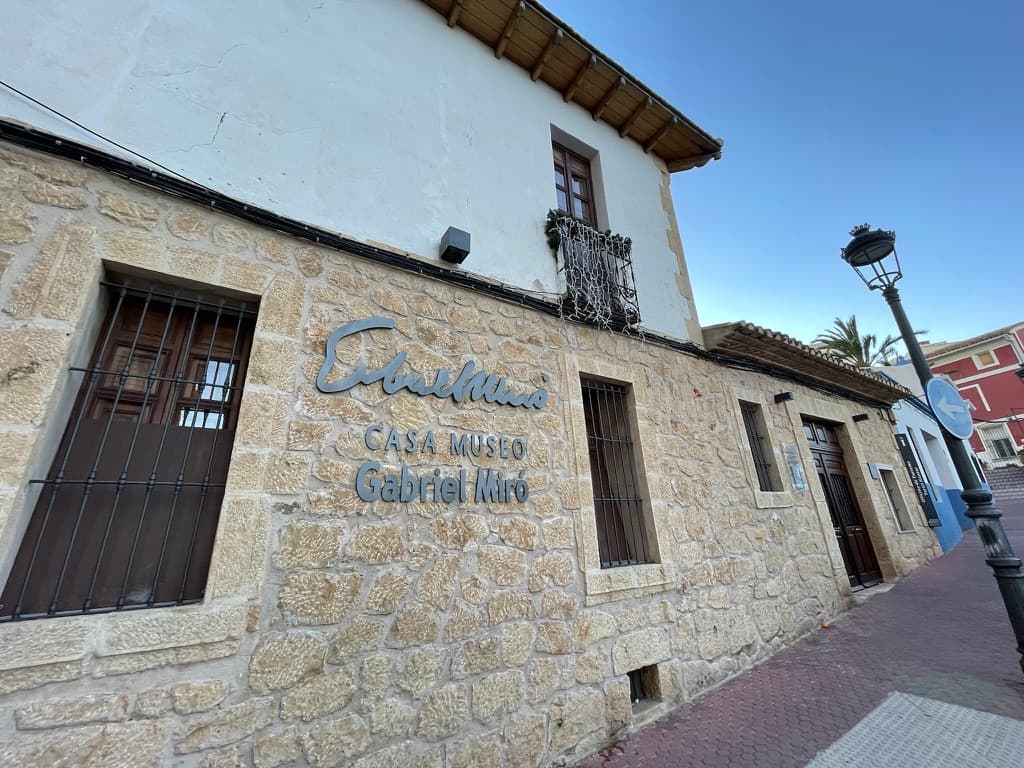
The town council website gives the same opening hours for the house museum and the tourist office: Monday to Friday, 10:00 to 14:00, by prior booking; the tourist office phone number is 626 001 089. The entrance price is not listed.
Walking routes from Polop
The Town Council has 17 published routes, with their difficulty and an information PDF for each one. The page does not give distances or durations; if one interests you, the PDF is the place to look. By difficulty:
- Low: the Xirles ravine and the Xirles–Gines–Guadalest Reservoir route.
- Medium, heading to another village: Polop–Font del Molí (Benimantell), Polop–Font de l’Arc (Sella) and three paths to Finestrat (via Sacarets, via Margotx and via the mountain track).
- Medium, through the sierra: Polop–El Castellet and three climbs up Ponotx (via Gulapdar, via Margotx and via the Canal ravine).
- High: El Salt, with three variants.
- Very high: Polop–Coll Pouet–summit of Puig Campana.
Two of the 17 are canyoning routes, not hiking: the Gulapdar ravine and the Rubia ravine. And watch out for the names: the Town Council writes Ponotx and Gulapdar and Turisme Comunitat Valenciana writes Ponoig and Gulabdar. They are two spellings of the same places. If you are looking for more walks in the area, there is our post on hiking in Benidorm and around.
A warning about the Ponotx via ferrata
It is not a plan for a family visit. The Town Council rates it medium-high difficulty, with rappels of 25 and 35 metres, and asks that you be a federation member or hold insurance covering the activity, as well as prior training and an experienced guide for groups. You must notify the Local Police before and after (639 628 165); in an emergency, call 112.
The Polop flea market: what we know about the day and the hours
Here we need to be careful. A flea-market portal, which says it checked the information in July 2025, and a press article from May 2026 agree that the antiques flea market (the “rastro”) opens on Sunday mornings; the portal gives the hours as 8:00 to 14:00 on Calle Teulería. Neither is an official source, and the rastro does not appear on the tourism or festivals pages of the Town Council that we have reviewed.
Before planning the trip around the rastro, call the Town Council (965 870 150) and confirm. For other markets in the area, there is our guide to markets and flea markets.
Festivities in Polop
This is the calendar published by the Town Council (consulted in October 2026). The exact dates can shift from one year to the next:
- San Jaime, around 25 July.
- Fiestas del Porrat, from 14 to 17 August.
- San Ramón Nonato, in Xirles, on the days before 31 August, with a procession.
- Patron saint festivities of San Francisco, four days with the main day on 4 October.
How to get to Polop
From the campsite, Polop is 13 kilometres and about 24 minutes by car. From Alicante, the Town Council indicates access via the AP-7 or the N-332 and the CV-70.
By bus, our guide to buses in Benidorm lists the urban and intercity lines in the area. Check the operator’s website to see whether there is a stop in Polop and the current timetables, which change.
La Séquia Mare: Polop’s water reached Benidorm
The Riego Mayor of Plaza de los Chorros has another name in Benidorm: the Séquia Mare. It is the Reg Major de l’Alfàs that Beatriz Fajardo de Mendoza created in 1666: for centuries it supplied water to Polop, La Nucía, L’Alfàs del Pi and Benidorm, and it was used for irrigation, flour mills and cisterns. In Benidorm it allowed the town to regain its status as an independent municipality, after the village was abandoned in the 16th century because of corsair raids. If that part of the story interests you, you can read it in our post on the history of Benidorm.
There is also an easy way to follow the thread of the water down to the coast. The Parque de la Séquia Mare, in Benidorm, covers 70,000 square metres, with a restored stretch of the historic canal, a cycle lane and picnic areas. The canal stopped serving its purpose around 1990. In October 2026 an interpretation centre on the history and culture of water in Benidorm opened in the park, inside the youth hostel. We have not found its hours or its price, so confirm them before you go.
What to combine with the visit
Polop is right in the Marina Baixa, surrounded by other villages with plans of their own. If you have time to spare, take a look at Guadalest, Finestrat or La Nucía. To see more villages on the coast and inland, here is our selection of Costa Blanca villages.
As a guide, between the castle, the square and the house museum you have a relaxed morning; the routes depend on which one you choose, and that is what each one’s PDF is for. Before setting out, confirm the rastro and download the PDF for your route from the Town Council website.
Written by
Juan Delgado VillenaExecutive Director of Camping Armanello
Tourism professional with experience in the management and direction of campsites on the Costa Blanca since 2008. Executive Director of Camping Armanello and CEO of Deltia, he combines his knowledge of Benidorm with tourism management and digital transformation.
Comments
Are we convincing you?
Book your stay in Benidorm