
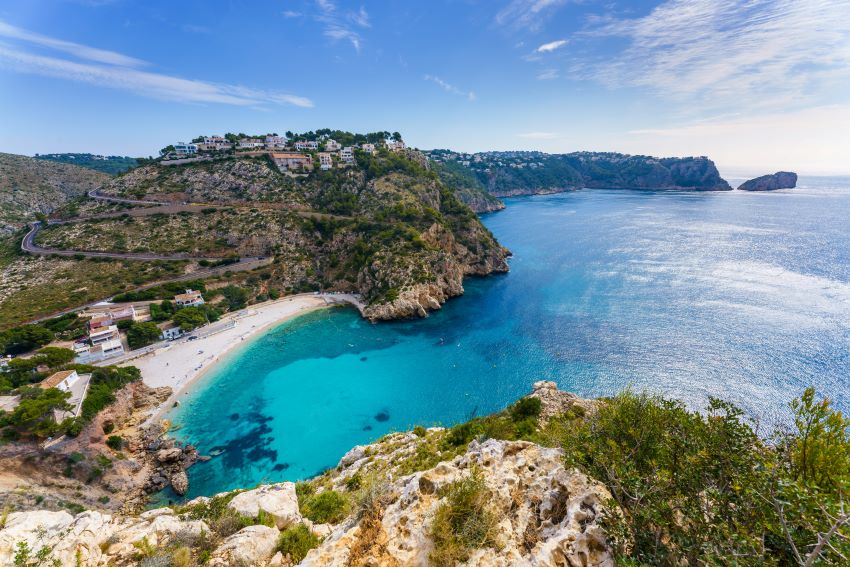
Jávea, on the northern coast of Alicante, is the municipality that offers the greatest variety of beaches and coves in the entire province. It is the municipality that marks the end of the Gulf of Valencia. Along its approximately 20 kilometers of coastline, you will find 13 beaches and coves surrounded by mountains and Mediterranean vegetation. The coves of Jávea offer a scenery that fuses the blue of the sea with the arid rocky mountains.
Each of these beaches or sandy areas has a unique charm, but they all share a common denominator: their calm and crystal-clear waters. Jávea is an ideal destination for any time of the year, as this corner of the Mediterranean enjoys a microclimate with average temperatures ranging between 18 and 24 degrees throughout the year. Get ready to discover some beautiful coves in Jávea.
Cala del Portixol or Cala Barraca
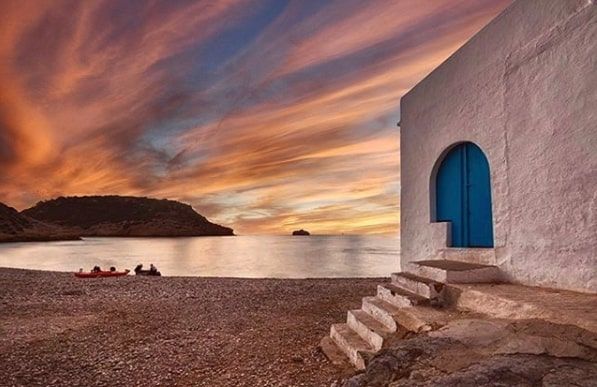
This small beach has two names, del Portixol or de la Barraca. The first refers to the Illa del Portixol, which can be reached by swimming, as it is located right in front of the cove, while Barraca is named after the white fishermen’s houses known by that term.
The beach is about 900 meters long and is made of gravel and stones. It is especially recommended for those who are not fond of sandy beaches. It is the most photographed of the Coves of Jávea, especially the blue door in the photograph.
It has services such as sun loungers and umbrellas, as well as kayaks and lifeguards, but it doesn’t offer many parking facilities.
Cala Barraca is particularly notable for the clarity of its seabed and the cliffs of Cap Prim on the left and Cap Negre on the right.
Granadella Cove
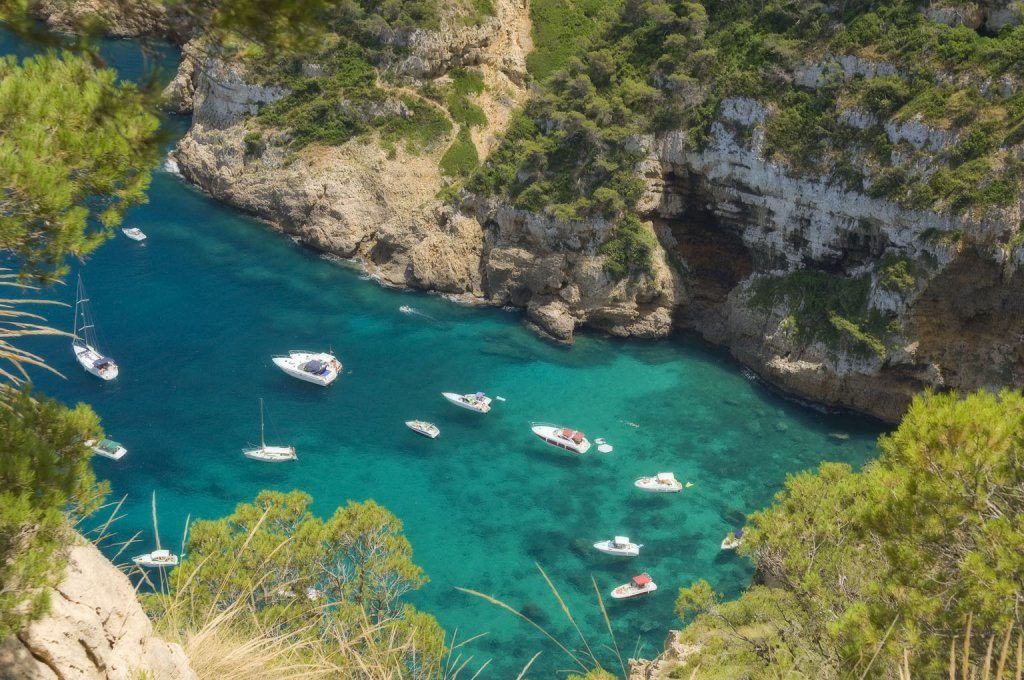
La Granadella is the southernmost beach in the municipality and is possibly the most beautiful cove in Jávea. It is a highly popular beach in summer that has a dirt parking lot. It is located in the La Granadella neighborhood, a former fishing suburb with small houses that are rented out in summer.
It is also a gravel beach that offers various services: sun loungers, umbrellas, lifeguards, kayaks, and even floating platforms.
It is an ideal place for snorkeling, with several marked routes. Among the recreational activities this cove offers, one of the most interesting is renting a kayak or canoe to explore some nearby caves such as the Llop Marí, at the tip of Ambolo.
Cala Blanca-La Caleta
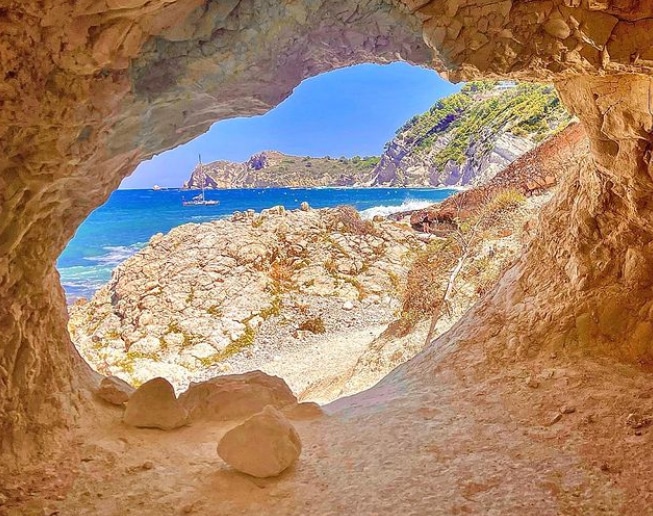
Exploring the coves of Jávea should lead you to visit Cala Blanca. In reality, this sandy area is the conjunction of three small coves: La Caleta I, La Caleta II, and La Cala del Francés. It is called Cala Blanca because of the white stones of its cliffs. These are small spaces ideal for sunbathing with family. Its crystal-clear waters allow you to see a great variety of flora and fauna on the seabed. They are not very accessible beaches, but they are worth visiting.
- La Caleta I is an inlet that is very protected from the waves, offering a perfect place for children to play.
- La Caleta II is the rocky outcrop that continues from the previous one, composed of rock and large stones, also well protected from the waves.
- Finally, La Cala del Francés receives this name because Mr. Lambert, one of the first tourists in Jávea, lived there.
Pope Beach or Tangó Beach

This sandy area is called a beach, but its size resembles more of a small cove. It is only 100 meters long and is located next to the marina of Jávea. Its name comes from a walkway called ‘tango’ that used to be in front of the beach. ‘Pope’ is derived from a Russian priest who used to bathe daily at the beach for a long time.
In reality, the Tangó or Pope is no longer a beach or cove, as the action of the sea has made the sandy area disappear. Here begins the Marine Reserve of Cabo San Antonio. However, the absence of sand does not prevent swimming, as you can take a dip from the rocks of the breakwater and dive to contemplate the interesting seabed of Jávea.
Arenal Beach
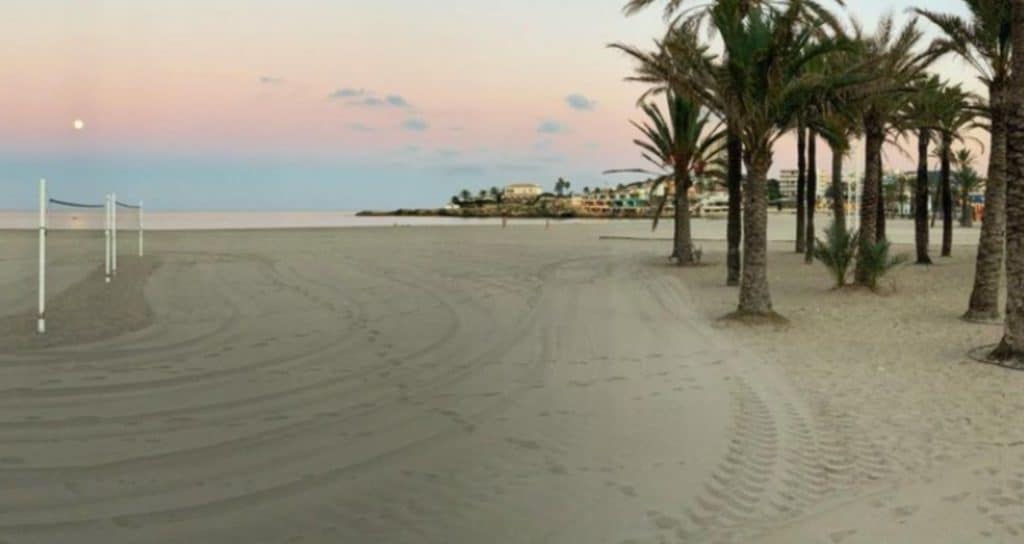
We include Playa del Arenal in this list because it is the only sandy beach in the entire municipality. This characteristic, and its nature as an urban beach, make it the most crowded in all of Jávea.
It offers calm and very transparent waters. It is equipped with numerous services such as rental of umbrellas, sunbeds, canoes, children’s games, cafes, restaurants and leisure spots on the nearby promenade. A
dditionally, it is a perfect space to enjoy sports on the shore, with beach volleyball nets and beach bars where you can rent jet skis. This beach is about 500 meters long and 50 meters wide.
Cala del Ministro
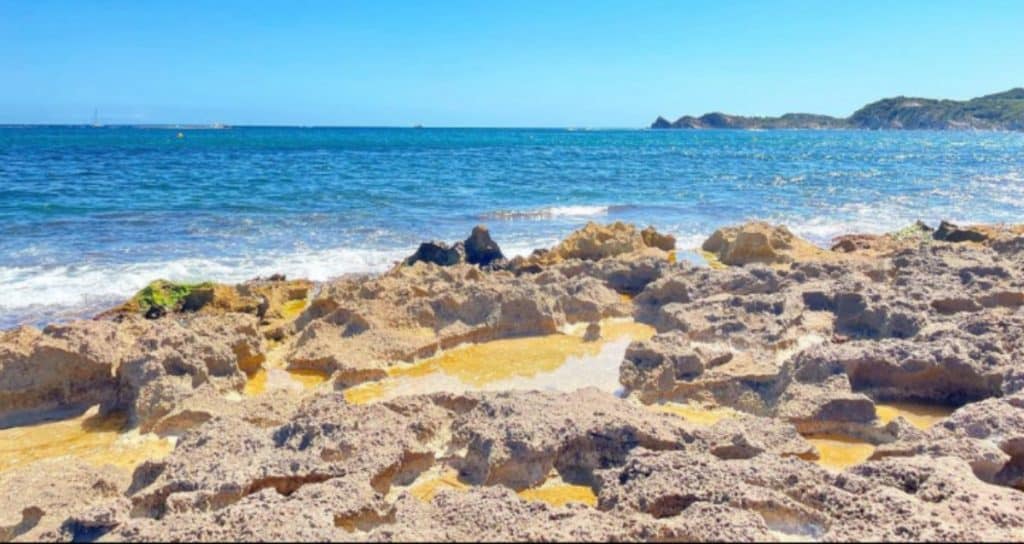
Cala del Ministro undoubtedly ranks among the most beautiful coves in Jávea due to its unique structure. Its curious name comes from the fact that Navarro Rubio, who was a minister during the Franco era, built his house there. Today the residence is uninhabited, but can be seen from the beach.
The cove is very small and mainly composed of stones, but it has an extensive historical legacy. Located there are the Queen’s Baths, a Roman settlement that served as a fish salting facility. It is an artificial construction that over time has transformed into natural pools.
At the end of the beach, there is a small viewpoint from which you can see the entire expanse of Playa del Arenal.
Sardinera Cove
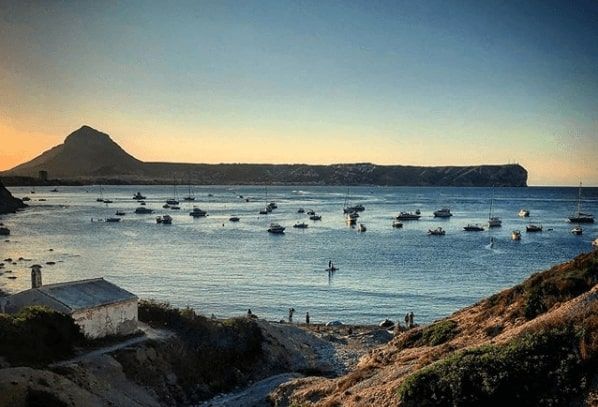
This almost virgin beach is less frequented due to its difficult access. It offers sky-blue waters and seabeds with Posidonia and abundant fauna. It shares characteristics with Cala del Ambolo, although access to the latter is now prohibited.
These are perfect spaces to enjoy relaxation and tranquility, but they are not as advisable for family enjoyment.
This concludes a brief overview of the coves of Jávea. The 20 kilometers of coastline, much of it dotted with high cliffs created by the Montgó Massif, give rise to spaces well protected from waves that offer the perfect setting for enjoying a swim. We recommend you visit La Cova Tallada and other magical spots along the coast.